
Introduction to Contract Lifecycle Management
In India’s rapidly expanding infrastructure sector, challenges like delays, disputes, and cost overruns have unfortunately become more common than on-time completions. While technical excellence and financial planning receive a lot of attention, one crucial aspect often gets overlooked: Contract Lifecycle Management (CLM).
At Proclep Consulting, we believe that CLM is not just an administrative necessity—it is the foundation of successful project execution and dispute prevention. When contracts are managed systematically from start to finish, stakeholders save time, reduce risks, and protect project margins.
What is Contract Lifecycle Management?
Contract Lifecycle Management refers to the structured management of a contract from initiation to closure. This includes:
- Drafting and Negotiation – Preparing contracts that clearly define scope, risks, and responsibilities.
- Execution – Ensuring that all parties sign off on obligations and timelines.
- Performance Monitoring – Tracking compliance, deliverables, and deadlines throughout the project.
- Amendments and Variations – Recording changes in scope, price, or time.
- Closeout – Final settlement, handover, and ensuring no claims remain unresolved.
By covering these stages systematically, CLM ensures that employers, contractors, and consultants operate within a transparent and enforceable framework.
Why CLM Matters in Infrastructure Projects
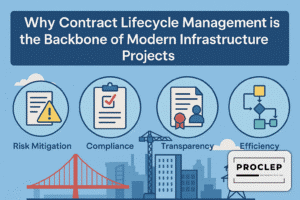
Large-scale infrastructure projects in India are exposed to multiple risks. Without strong contract governance, disputes are inevitable. A well-structured CLM process addresses these key areas:
- Risk Mitigation
Contracts are the first line of defense against risks. CLM identifies, documents, and manages risks before they escalate into disputes. For example, if a contractor anticipates delays due to monsoon or regulatory approvals, timely notice under the contract safeguards their entitlement.
- Compliance
Indian projects must align with The Indian Contract Act, 1872, as well as specific frameworks like CPWD General Conditions of Contract, MoRTH EPC Guidelines, and PPP models. CLM ensures that these obligations are monitored and enforced at every stage.
- Transparency
One of the biggest challenges in infrastructure is proving entitlements during claims. CLM provides a clear record of obligations, correspondences, claims, and variations, ensuring that both employers and contractors have evidence-based positions.
- Efficiency
Instead of endless paperwork and ad-hoc communication, CLM streamlines documentation, approvals, and change management. This reduces delays in decision-making and allows projects to move forward with clarity.
Real-World Impact of CLM in India
India’s infrastructure growth story is full of opportunities—but also hurdles. Projects such as national highways, metro rail corridors, and renewable energy plants often face:
- Land acquisition delays caused by local bureaucracy.
- GST and taxation changes that alter project economics.
- Force majeure events like the COVID-19 pandemic, which halted construction nationwide.
In all these cases, robust Contract Lifecycle Management ensures that stakeholders issue timely notices, maintain hindrance registers, and compile structured claims. This not only strengthens their legal position but also creates an opportunity for amicable settlements instead of prolonged disputes.
Proclep Consulting’s Edge in CLM
At Proclep Consulting, we specialize in contracts, claims, and arbitration management. With our unique blend of engineering expertise and legal acumen, we help both employers and contractors implement effective CLM practices.
- For Employers: We design systems to prevent unwanted claims, monitor contractor delays, and ensure compliance with contract obligations.
- For Contractors: We assist in documenting entitlements, preparing claims, and safeguarding financial margins.
Our approach goes beyond traditional paperwork. We leverage digitization, AI tools, and proactive documentation strategies to deliver efficiency and accuracy. This minimizes disputes and ensures that infrastructure projects progress smoothly.
In today’s environment, Contract Lifecycle Management is no longer optional—it is the backbone of modern infrastructure development. Without it, projects risk falling into the cycle of delays, claims, and disputes that cost crores and derail timelines.
For stakeholders in India’s construction industry—whether government agencies, private employers, or contractors—investing in structured CLM today means fewer disputes and greater success tomorrow.
At Proclep Consulting, we are committed to building a future where contracts are not just legal documents but living frameworks that ensure fairness, transparency, and project success.Looking to strengthen your contract management process? Contact Proclep Consulting to explore how our expertise can safeguard your next project.